

Pluria or Regus? An Honest Look at Both Before You Decide

06 October, 2026
Share this article
Table of Contents
Regus and Pluria are two different ways to solve the same problem: giving your team a professional place to work without committing to a long-term office lease. But the problem each one solves best is not the same.
This comparison uses real prices, real cities and concrete use cases. It is not advertising for either option. If Regus is the better choice for your company, you will see it here. If Pluria is, you will see that too.
For teams actively evaluating the best alternative to Regus in LATAM and Europe, this is the comparison that matters.
What Is Regus, What Is Pluria and How Are They Different?
Regus is the world's largest flexible workspace chain by number of locations. It operates under the IWG (International Workplace Group) brand, which also includes Spaces, HQ and Signature.
Unlike WeWork, which has a more design-forward and community-oriented profile, Regus has a more corporate and functional profile: professional infrastructure, flexible contracts and presence in cities where other chains do not reach.
Regus also offers a product most coworking alternatives do not have: a virtual office, giving companies a recognized business address with mail handling and occasional access to physical spaces, without paying for a permanent desk.
Pluria does not operate its own spaces.
Pluria is a network that connects over 1,000 workspaces across 25 countries and 200 cities, including coworking spaces in Bogotá and across LATAM and Europe.
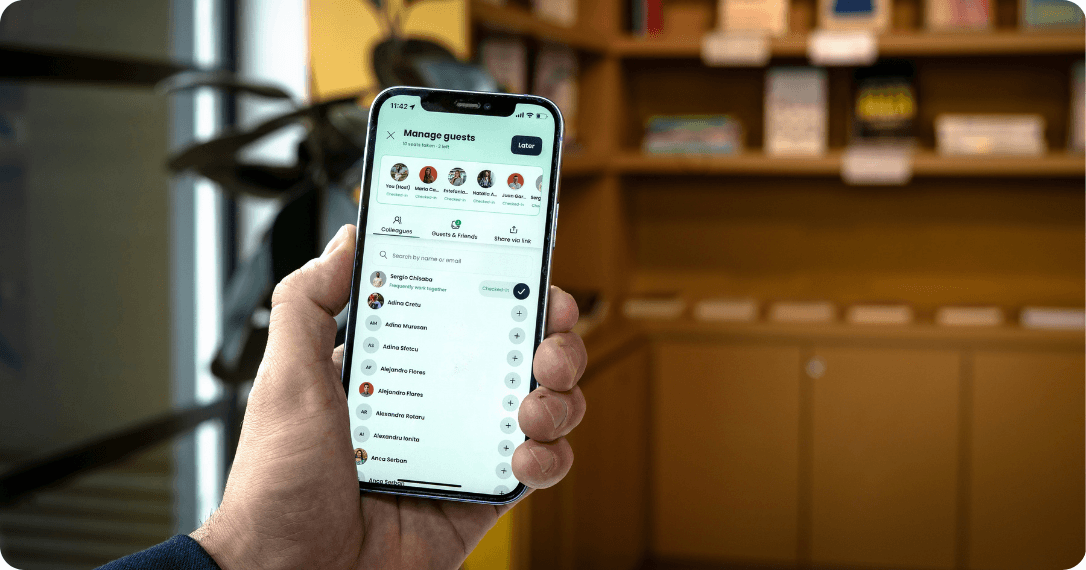
The company signs one contract with Pluria and the team accesses any space in the network from a single app, with one monthly invoice.
The spaces Pluria connects include:
- Coworking desks
- Work cafés
- Meeting rooms bookable by the hour
- Private offices
- Event spaces
The most important difference is not price or design. It is the model.
Regus is a provider of its own spaces in specific cities. Pluria is a provider that connects what already exists in each city, under one agreement.
A note on terminology: IWG and Regus are often used interchangeably. Technically, Regus is one of IWG's brands. In this article we use Regus to refer to the main product of the group in the region. Anyone looking for an IWG alternative will find the same comparison applies.
The Cities Where Each One Operates
Regus has broader coverage in LATAM than WeWork, particularly in secondary cities. That being said, its coverage is still that of a chain with its own buildings: wide for what it is, but limited compared to a network of independent spaces.
Regus also has presence in Brazil, Chile and other countries in the region. For an updated list of locations, it is worth checking regus.com directly as the network changes frequently.
Cities in LATAM where Regus operates
In Europe, Regus has significant coverage across Western Europe but limited presence in Eastern European markets. For companies with teams in cities like Bucharest, finding a credible alternative to Regus with local coverage is a real need. Pluria covers coworking spaces in Bucharest and other Eastern European cities from the same network.
Cities in LATAM where Pluria operates
Pluria covers 200 cities in 20+ countries, including all cities where Regus operates and hundreds more. You can also browse coworking spaces in Mexico City and the rest of the network from the same account.

How Much Do Pluria And Regus Cost?
A simple price-per-day comparison gives an incomplete picture. The models are different and what each includes is different too.
Regus Pricing
Regus offers several access formats with different price points depending on the city, space type and contract length:
According to regus.com, in Mexico City, a coworking membership starts from USD 75 per month with flexible access, and dedicated desks from USD 131 a month, while in Colombia, a dedicated desk starts from approximately USD 125.
The prices published on their website generally apply with 12 to 24 month contracts. Month-to-month prices are higher. Regus also offers a virtual office product starting from approximately US$74/month in Colombia, which gives companies a business address and mail handling without paying for a permanent physical space.

Pluria Pricing
Pluria’s cost varies based on actual team usage: US$23 per person per day booked for most companies, with volume pricing for larger organizations.
That figure covers access to coworking desks, work cafés, meeting rooms and private offices across over 1,000 spaces in 200 cities.
One account, one invoice, regardless of how many spaces or cities the team uses in a given month.
The relevant question is not what the day costs in isolation. It is what it costs to have workspace solved for the whole team, in every city where they work, without separate admin for each location.
That is the Pluria vs Regus comparison that changes the result for most multi-city teams.

Pluria vs Regus: What Each Includes Beyond the Desk
The desk with WiFi is the baseline. What differentiates Regus and Pluria day to day is what comes after.
Regus includes:
- Functional corporate spaces with consistent design across locations
- Coffee and tea at most locations
- Reception and on-site support
- Printers, phone booths and meeting rooms within the monthly credit allowance
- Business address and mail handling through the virtual office product
- Access to the global IWG network, which includes Spaces, HQ and Signature brands
What Regus does not include without additional cost: meeting rooms beyond the plan's credit allowance, access in cities where it has no building, and space types beyond coworking and private offices.
Its profile is more corporate than community-oriented: there is less focus on events and networking than WeWork.
Pluria includes:
- Access to over 1,000 spaces in 200 cities from a single app
- Coworking desks, work cafés, meeting rooms, private offices and event spaces, all from the same account
- One monthly invoice for the whole team, regardless of how many spaces or cities were used
- Admin dashboard with usage by person and location
- Access to multiple cities without additional contracts
What varies with Pluria: the experience depends on the specific space. Not all have the same design level or included services. The network sets minimum standards, but quality is not as uniform as in a chain that owns its own buildings.

When Does Regus Make More Sense?
Regus is the better option in specific cases where its advantages are real:
- Your company has a corporate and executive profile. Regus has a formal, predictable style that works well when clients visit frequently and professional image matters.
- You need presence in secondary cities with corporate standards. Regus has broader coverage in secondary cities than WeWork. If the company operates in Querétaro, Medellín or similar cities and needs a chain with corporate standards, Regus may be the only option available.
- The team goes in every day at a single location. For teams with high and predictable usage in one city, a fixed monthly membership can be more cost-efficient than paying per day.
When Does Pluria Make More Sense?
Pluria wins when the problem goes beyond a desk in one city:
- Your company operates in more than one city. For a company with people working from different cities at the same time, Pluria resolves everything from one account. You can browse coworking spaces in Buenos Aires and the rest of the network from the same platform.
- Space usage is variable. If the team does not go in every day, paying a fixed membership per person is inefficient. With Pluria you pay based on actual usage.
- You need more than desks and private offices. Work cafés, meeting rooms by the hour in multiple cities, event spaces: all from the same app and the same invoice. Regus covers coworking and offices, but not work cafés or event spaces.
- Admin management matters. With multiple cities and space types, managing separate providers consumes real time. One account, one invoice and visibility over the whole team's usage in a single dashboard is a concrete operational argument, not just a marketing benefit.

When to Consider Switching from Regus
Most companies that start looking for a best alternative to Regus have outgrown the model that Regus represents: a chain with its own buildings, fixed monthly costs per person and coverage limited to cities where IWG has decided to open a location.
When any of those conditions no longer fit the company's reality, the model starts working against it.
The natural first move is to look at another chain: WeWork, Spaces or a local operator. That solves some problems. But switching from Regus to another chain is changing providers, not changing the model. The administrative structure stays the same. If the team is in four cities, there are still four separate relationships to manage.
A workspace network like Pluria changes the model entirely.
Not another chain: a single vendor that connects over 1,000 independent spaces across 200 cities under one Master Services Agreement. One contract, one app, one invoice, regardless of how many spaces or cities the team uses.
When the company expands to a new city, the workspace is already there. When someone travels, they open the app and book.

How Should You Decide Which Option Is Best For Your Team?
Three concrete questions that help reach the right answer:
- Do you need a business address without a permanent physical space? If yes, Regus has a specific product for that. Pluria does not offer a virtual office, so for this use case Regus is the more direct option.
- How many cities does your team work from? If it is one city where Regus operates, either option can work. If it is two or more, or if any of those cities is not covered by Regus, Pluria is the only option that resolves everything from one account.
- How often does the team use workspace and what types do they need? If the team goes in every day to the same building in one city, a fixed Regus membership may be more cost-efficient. If usage is variable, Pluria covers all from one platform.
To explore what spaces Pluria has in the cities where your company operates, request a Pluria demo and we will map out the options together.
FAQs
Remote work
Keep up to date with our most recent articles, events and all that Pluria has to offer you.
By subscribing to the newsletter you agree with the privacy policy.

The future is hard to predict.
Unfortunately, there’s no crystal ball that can tell us exactly what will happen. Yet, there are structured methods that[...]
22 October, 2025

In today’s fast-paced business environment, projects move faster than ever before.
Customer expectations shift constantly, new competitors enter [...]
29 October, 2025

More often than not, the best ideas do not develop in a linear fashion.
As a matter of fact, they usually emerge from a single word, an unexpected conn[...]
07 November, 2025