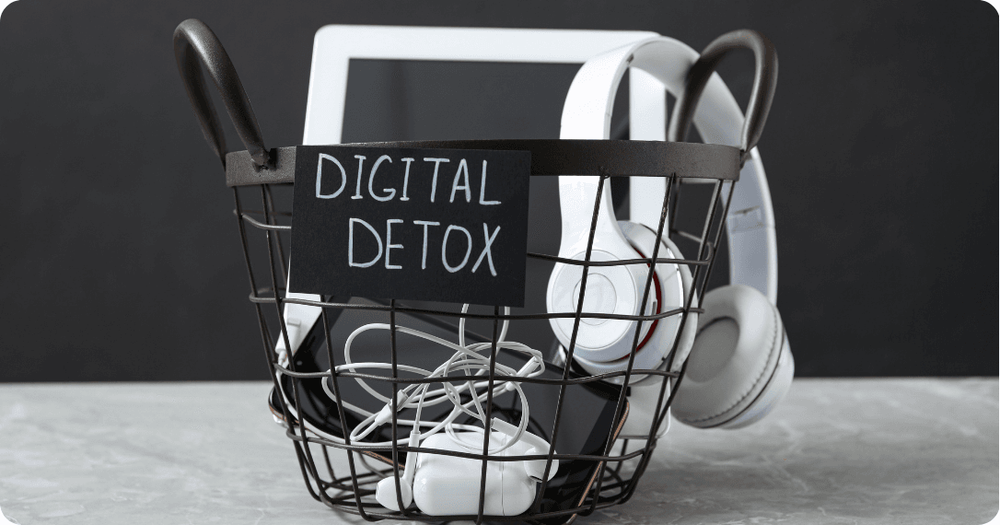
Digital Detox: Tips for Reducing Your Screen Time

23 February, 2026
Share this article
Table of Contents
You wake up and, almost without thinking, you reach for your phone.
Not to call anyone. Not because something urgent happened. Just to “quickly check” what you missed while you were asleep. One pending message. Two notifications. Three emails. Before getting out of bed, you have already spent ten minutes scrolling.
The day continues with virtual meetings, work chats, social media, news, short videos, more emails. At some point, you feel tired, but not physically tired. It is a different kind of saturation. Your mind never fully rests, even when your body does.
That scene is not unusual. In fact, it has become normal for people of all ages. And that is precisely the problem.
Recent reports show that the average adult spends between six and eight hours per day in front of a screen, not including mandatory work-related activities. In some countries, the combined time across phone, computer, and television exceeds ten hours daily. That is more than a full workday.
In this context, the concept of a digital detox has gained relevance. Not as a passing trend, but as a response to a growing concern: are we using technology intentionally, or are we simply managing online overload without realizing it?
Before thinking about solutions, it helps to pause and ask something basic: what is a digital detox and why are more individuals and organizations embracing digital well-being strategies as part of everyday life?

What Is Digital Detox?
A digital detox is a voluntary period during which a person reduces or temporarily eliminates the use of digital devices, especially those linked to social media and continuous information consumption. The end goal is to restore attention, mental clarity, and balance.
In simple terms, it follows the broader idea of what a detox is. A detox involves reducing or removing something that the body or mind has been consuming excessively. In the case of a digital detox, what is being reduced is not a substance, but stimulation caused by digital devices.
Digital detox does not mean rejecting technology or disconnecting permanently. It does not require quitting work or disappearing from professional responsibilities.
Instead, it focuses on creating conscious limits in an environment designed to constantly capture attention.
The Origin of Digital Detox
The term became popular around 2012 and 2013, when the widespread use of smartphones and social media began to reveal noticeable side effects. Constant notifications, algorithm-driven content, and 24-hour connectivity changed how we work, rest, and relate to others.
As platforms optimized engagement metrics, concerns emerged about:
- Reduced concentration
- Anxiety linked to constant notifications
- Difficulty unplugging from devices after work
- Sleep disturbances
The idea of digital detox began in wellness blogs, later appearing in mainstream media, and eventually entering academic conversations about digital well-being strategies and healthy tech habits.

The Evolution of Digital Detox
In its early form, digital detox often meant radical disconnection. Turning off your phone for an entire weekend. Going to retreats without internet access. Deleting social media accounts completely.
Over time, the approach evolved.
Today, when we ask what digital detox means, the answer is more nuanced. It is no longer about eliminating technology, but about developing mindful use of digital tools.
This evolution has moved through three stages:
- Temporary full disconnection.
- Conscious reduction of screen time and specific apps.
- Sustainable design of healthy tech habits in daily life.
In workplaces, this shift is also visible. Companies are exploring workplace digital breaks, communication boundaries, and policies that encourage unplugging from devices outside working hours without harming productivity.
Understanding digital detox today means recognizing that we are not trying to live without technology. We are trying to prevent technology from occupying every available space in our attention.
Which leads to the practical question: how can you implement a digital detox realistically?

How to Do a Digital Detox
The key is not disappearing from the digital world. It is regaining control over your attention.
1. Measure Before You Reduce
You cannot change what you do not see.
The first step in reducing screen time is reviewing your actual daily usage. Most smartphones provide weekly statistics. Many people underestimate their screen exposure by 30 percent or more.
Ask yourself:
- How many hours do I spend on social media daily?
- How many notifications do I receive each day?
- How often do I unlock my phone without a clear purpose?
Awareness is often more powerful than external advice.
2. Remove Unnecessary Friction
Not all screen time is equal. Work, study, and essential communication are not distractions.
The goal of digital detox is to reduce automatic consumption.
Practical actions:
- Turn off non-essential notifications.
- Delete apps that trigger habitual scrolling.
- Move social media off your home screen.
Small environmental changes support mindful use of digital tools.
3. Define Clear Digital Windows
Switching from hyperconnected to fully disconnected overnight rarely works.
Instead, set specific time boundaries.
For example:
- No phone use during the first hour of the day.
- No social media after 9 PM.
- Structured focus blocks without checking messages.
These limits are essential well-being strategies, especially in environments where work and personal life overlap.

4. Replace, Do Not Just Remove
If you reduce screen time without alternatives, the gap will quickly fill itself.
Replace digital habits with:
- Physical reading
- Exercise
- Face-to-face conversations
- Deep concentration sessions
A digital detox works best when it builds healthy tech habits rather than simply eliminating stimulation.
5. Design a Supportive Environment
Willpower alone is not enough when your environment is engineered for distraction.
Consider:
- Not sleeping with your phone next to your bed.
- Using a traditional alarm clock.
- Creating device-free zones at home.
In workplaces, structured workplace digital breaks strengthen focus, support, and even psychological safety.
Tech-Free Productivity Routines
Reducing screen exposure works best when replaced with intentional routines. These tech-free productivity routines support focus, creativity, and sustainable performance without constant digital stimulation.
Here are five routines that help replace screen time effectively.
- Daily physical reading session. Reading printed books for at least 20 to 30 minutes strengthens sustained attention. Unlike digital content, physical books reduce multitasking impulses.
- Morning planning on paper. Writing your daily priorities by hand improves clarity and intention. It encourages mindful use of digital tools later in the day. This small habit reduces reactive behavior.
- Deep work sessions without screens. Certain tasks, such as brainstorming or strategic thinking, benefit from offline thinking time. Using notebooks instead of digital notes reduces distraction.
- Evening reflection journaling. Writing reflections before bed replaces late-night scrolling. It improves emotional processing and reduces screen exposure before sleep. This routine strengthens long-term digital well-being strategies.
- Scheduled walking breaks. Short outdoor walks without devices reset mental energy. Movement reduces stress accumulated from managing online overload.
Tech-free productivity routines are not about rejecting technology. They are about designing balanced cycles of connection and disconnection.
When these routines are integrated consistently, reducing screen time becomes sustainable rather than restrictive.

Benefits of Digital Detox
Talking about a digital detox can sound abstract until you actually experience it.
The changes rarely feel dramatic on day one. Instead, they appear gradually, often in subtle but meaningful ways that influence attention, mood, and productivity.
When practiced consistently, reducing screen exposure does more than just lower device usage. It reshapes how your mind processes information and how you respond to stimulation.
Here are some of the most relevant benefits.
- Improved concentration and cognitive depth. Constant notifications fragment attention and reduce your ability to engage in deep work. By reducing screen time intentionally, your brain regains the capacity to sustain focus for longer periods.
- Lower digital anxiety and mental fatigue. Continuous alerts create a subtle but persistent sense of urgency. A structured digital detox helps in managing online overload by reducing that background tension.
- Stronger interpersonal presence. When you practice mindful use of digital tools, conversations become less distracted and more intentional. Whether at home or in the workplace, reduced device dependency strengthens human connection.
- Greater emotional awareness and self-regulation. Constant digital input often masks internal signals such as stress or overwhelm. Digital well-being strategies help you reconnect with those signals, enabling more deliberate decision-making.
- Better sleep quality and recovery. Screens stimulate the brain even when you believe you are relaxing. Establishing healthy tech habits, especially before bedtime, improves sleep cycles and increases next-day energy levels.
Over time, small shifts in attention management create noticeable improvements in clarity, energy, and resilience. And once those benefits become visible, the next step is practical: how do you limit your screen time consistently without feeling restricted?

Tips for Limiting Your Screen Time
Reducing screen exposure does not require extreme measures. Sustainable change comes from small, repeatable adjustments that support healthier interaction with devices.
If your goal is reducing screen time while maintaining productivity and connection, these strategies provide a realistic starting point.
- Establish clear screen-free periods each day. Choose specific windows when devices are not allowed, such as the first hour after waking or during meals. These boundaries create predictable pauses that support unplugging from devices.
- Disable non-essential notifications. Every notification competes for your attention and increases cognitive switching. By limiting alerts to only what is urgent or necessary, you reduce digital noise and strengthen mindful use of digital tools.
- Create structured focus blocks. Dedicate 45 to 90 minute sessions to concentrated work without checking messages or social media. These intentional breaks help prevent online overload from becoming the default.
- Separate professional and recreational digital use. Avoid using the same device interchangeably for work and leisure. Clear separation reinforces healthy tech habits and reduces the impulse to transition from productive tasks to passive scrolling.
- Change your physical environment strategically. Working occasionally in distraction-free spaces or stepping outside for short intervals reduces habitual screen checking. Environmental shifts support digital well-being strategies.
- Track your weekly usage trends. Reviewing your screen time regularly builds accountability. Awareness helps you adjust before unhealthy patterns become normalized.
Limiting screen time is not about perfection. It is about building systems that support balance rather than relying on willpower alone.
When these habits become routine, a digital detox no longer feels like an intervention. It becomes a natural part of how you manage attention, productivity, and well-being in a connected world.

Conclusion
A digital detox is not an overreaction to modern life. It is a conscious adjustment within an environment that constantly competes for attention.
Understanding digital detox means recognizing that attention is limited. Without boundaries, managing online overload becomes the default.
Digital well-being strategies do not require extreme measures. They begin with small adjustments, consistent routines, and mindful use of digital tools.
The final question is simple: are you using technology intentionally, or automatically?
The difference between those two states is where meaningful change begins.
Remote work
Keep up to date with our most recent articles, events and all that Pluria has to offer you.
By subscribing to the newsletter you agree with the privacy policy.

The future is hard to predict.
Unfortunately, there’s no crystal ball that can tell us exactly what will happen. Yet, there are structured methods that[...]
22 October, 2025

In today’s fast-paced business environment, projects move faster than ever before.
Customer expectations shift constantly, new competitors enter [...]
29 October, 2025

More often than not, the best ideas do not develop in a linear fashion.
As a matter of fact, they usually emerge from a single word, an unexpected conn[...]
07 November, 2025