

What is Hybrid Work?

25 November, 2025
Share this article
Table of Contents
A couple of years ago, I noticed an interesting change of mentality within the team I worked with.
My colleagues no longer asked “when do we work from the office this week?” Instead, the question quietly shifted into “what do we actually need to do together in-person?”
From that moment forward, I’ve seen countless managers and team leaders question exactly what hybrid work consists of, and how it can be used to maximize results and embrace the rise in popularity of work-life balance.
While some of them have applied this model better than others, it is clear that in order for hybrid work to actually succeed, one needs to understand certain aspects of the question: what does my team actually need?
I found that the best hybrid workplaces are not built on rules of location, they are built on purpose, and while there is no universal formula to find the perfect hybrid work system, I do believe in certain principles that can help you lay out the best strategy for your team.
Hybrid is not a trend. It is a long term cultural reconfiguration of how value is produced. And when it is designed thoughtfully, this flexible work model can protect productivity, strengthen trust, and give people a healthier relationship with their work.
In this article, you will learn more about the definition of hybrid work, how it differs from a remote modality, and how you can best implement it, today.
What Is Hybrid Work?
Definition of Hybrid Work
Hybrid work is a flexible work model where employees split their time between remote work and face-to-face collaboration.
Instead of defining value by how much time you spend behind your desk, hybrid work focuses on purpose. Therefore, it requires you to ask your team what tasks actually require being together and which ones are performed better while individually at home.
In a hybrid workplace, the office becomes a strategic tool rather than a mandate. Work happens where it makes the most sense, not just to you as a leader, but to all of your colleagues alike.
But, how does this model function in real life?
Every team defines its own hybrid work schedule according to context. Sometimes full-team alignment happens in person because brainstorming or collaboration benefits from proximity.
For instance, take a creative design team for an advertising firm. Being together in the same space is necessary for them to bounce ideas off each other in a natural way.
Other times, deep focus tasks are done remotely because distraction is lower and autonomy is higher. It adapts to the work, instead of forcing the work to adapt to the location.
The same design team might need some alone time after a creative meeting to engage in deep work in order to finish campaigns and meet deadlines.
A Brief History of Hybrid Work
Hybrid work existed long before the pandemic, but it was treated as a privilege or an exception rather than an intentional operating model. Some industries occasionally allowed certain roles to work from home one day a week, usually controlled by “permission.”
When the world was forced into remote work overnight in 2020, and the following months saw organizations realize two important truths about work:
- productivity was not location dependent
- humans valued freedom more than proximity
After restrictions eased, very few teams wanted to return fully back to the office. However, leaders were worried that going fully remote might bring about limitations for culture, onboarding and collective identity.
Hybrid work emerged naturally as the middle ground. It was not designed in a conference room, it evolved from lived experience, urgency, constraints and discovery.
As you are probably already aware, the hybrid vs remote work discussion is one of the most talked dilemmas in modern offices.
How Hybrid Work Is Used Today
Modern organizations use hybrid work not as a perk, but as part of their operating strategy. Leaders design hybrid work arrangements based on impact:
- Which tasks require genuine human connection?
- Where does deep focus thrive best?
- What are the rituals that can keep my corporate culture alive even when teams are dispersed throughout the world?
The office has shifted from a mandatory attendance system to a high leverage collaboration environment. Some companies use rotating hybrid work schedules. Others allow employees to self-select where they work based on individual preference. Many are adopting coworking spaces to expand access to flexible work models beyond a single physical HQ.
Companies like Pluria are using hybrid work to increase employee engagement, improve work life balance, lower burnout risk, and unlock talent across multiple cities and countries.
It is one of the biggest operational redesigns of this decade, not an experiment, but a structural evolution of how work gets done.

Hybrid Work vs Remote Work
Remote work refers to a model where employees perform their job entirely from outside the company office. It can be from home, coworking spaces, or any location that allows them to perform their responsibilities efficiently.
For many professionals, remote work became the default after 2020 because it unlocked time, autonomy, and work-life balance in a way that an office never could.
I still remember how strange it felt the first time I finished a complex project without having stepped into an office for weeks. It challenged my own assumptions of what being productive actually meant.
This is why the debate between hybrid and remote work exists. Both models offer flexibility, but they serve different needs.
Hybrid work protects human connection by making in-person collaboration intentional. Fully remote work protects individual freedom and efficiency by allowing people to be in charge of their own work environment.
Different companies and different teams benefit in different ways from these models. Choosing one over the other requires clarity, not chasing after the hottest trend.
Five Things to Consider Before Choosing Hybrid or Remote
- How does your team learn and grow?
Learning is not only the transfer of knowledge from one brain to another. It is also the accidental discovery, overheard context, and organic mentorship. If your team depends strongly on this cross-pollination to evolve, hybrid might offer better outcomes.
- What kind of work drives your core results?
Tasks that require long periods of focus can flourish in remote environments. Teams working on intense brainstorming might get higher quality results when together physically.
- What level of trust have you established within your team?
Remote work works best when there is already solid trust in output and autonomy. Hybrid is helpful when trust is still being built and proximity speeds up that process.
- How distributed is your talent pool?
If your company hires people from multiple cities or countries, remote work might be a natural advantage because it removes friction. Hybrid becomes powerful when your talent is mostly within reachable distance.
- What is the emotional state of your team today?
An aspect I’ve seen often gets forgotten, teams that have experienced burnout or isolation for long periods might need hybrid rituals to recompose their social energy. One afternoon together can sometimes do more than any other framework.
When I see companies choose well between hybrid and remote work, it is never because of trend pressure. It is always because they matched the reality of their team with a model that protects both performance and humanity.
Benefits of Hybrid Work
When hybrid work is intentionally designed, the impact is visible not only in productivity, but also in how teams relate to their work and to each other. These are three stand-out benefits of implementing hybrid work:
1. Better Work Life Balance
When employees are able to manage part of their week remotely, they regain hours that usually get lost in commute, rigid scheduling or unnecessary in person attendance. This time can be redistributed into rest, focus, personal administration or deep concentration work.
For instance, a product marketing specialist blocks Mondays at home to draft core messaging and strategic content. By Thursday she returns to the office with clearer direction and fewer revisions needed.
2. Higher Flexibility Without Losing Human Connection
A flexible work model does not mean isolation. Hybrid work protects the social and collaborative value of the workplace, while still allowing autonomy. This balance supports without micromanagement.
Imagine a cybersecurity team that sets every Wednesday as their in-person day. They use that time only for workshops, threat modeling and peer review. The rest of the week is remote and asynchronous, which reduces unnecessary meetings and increases productivity.
3. Stronger Employee Engagement
When people have control over their environment and schedule, engagement tends to increase because work feels less like restriction and more like contribution. Hybrid work helps employees feel trusted, and trust increases involvement.
For example, a design agency allows each member to choose their own hybrid work arrangement. Teams that have limited time together end up participating more often in creative critiques and proactively proposing new ideas, knowing office space is meant for collaboration.
Hybrid work does not try to choose between freedom or collaboration. It simply recognizes that both are necessary to produce better work, sustainably.
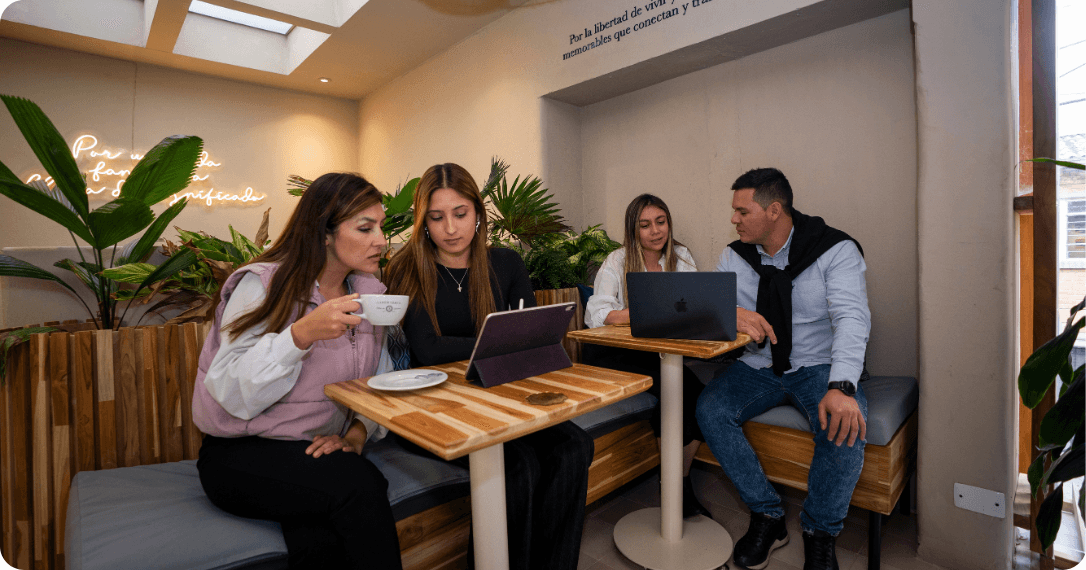
Practical tips for implementing hybrid work
Hybrid work is not successful by accident. The teams that make it work long-term are the ones that treat hybrid as an operating system that needs to be constantly looked after.
A hybrid work arrangement needs purpose, clear agreements and shared norms. Think of it as another project that helps you with the smaller, somewhat more complicated problems.
These simple principles can help you set foundations for an optimal way of working:
- Define together what requires physical presence: Not every activity deserves an office day or a long meeting. Discuss which types of collaboration truly benefit from being in-person, such as reviewing UX design for your new app or brainstorming ideas to solve an operations issue.
- Protect asynchronous clarity: Hybrid fails when every conversation defaults to meetings. Invest in written documentation so decisions do not depend on who happened to be present at any given moment.
- Match work mode to work energy: Encourage people to align tasks with the environment that supports them best. Deep thinking or drafting is usually more effective at home. Rapid iteration or co-creation tends to thrive in shared space.
- Make the system reviewable: Hybrid is not static. Revisit agreements monthly or quarterly to see what is actually working. The most resilient hybrid workplace is one that evolves, not one that tries to enforce a single rule forever.
The Future of Hybrid Work: Coworking and Talent Distribution
Something I’ve learned watching teams evolve over the last few years is this: hybrid work didn’t just change where we work. It changed how we relate to work itself.
This flexible work model enables people to choose the context that supports the kind of thinking they need. Some days require solitude and quiet. Other days require collective chemistry and spontaneous interaction. And this is where coworking has quietly become one of the most powerful catalysts of hybrid work.
Coworking spaces give people the ability to create new context without breaking routine. It is not home, but it is not corporate headquarters either. Sometimes I think hybrid works because it reminds people that creativity needs oxygen, and coworking gives that oxygen back.
If hybrid work continues growing, cities will keep evolving around this model too. More local micro hubs. Shorter commutes. More walking. More distributed talent networks.
Instead of everyone needing to gather in one single corporate address, value can be produced from multiple places simultaneously.
Hybrid is not only about flexibility. It is about designing a work life that sustains performance without draining people in the process. And coworking is one of the reasons this new era can actually function. It gives teams physical optionality, emotional reset, and a healthier way to reconnect when being together actually matters.
Frequently Asked Questions About Hybrid Work
1. What is hybrid work?
Hybrid work is a flexible work model where employees combine working remotely and working from a shared physical location like an office or coworking space.
2. Is hybrid work the same as remote work?
No. Remote work is fully location independent. Hybrid work blends both remote and in person time depending on the needs of the team, the task, or the moment.
3. How many in-office days should a hybrid schedule include?
There is no magic/universal number. The best hybrid work schedule depends on your team’s goals, responsibilities, and operational needs. Some teams require two in-office days, some only one per month.
4. Does hybrid work improve work life balance?
Yes, when implemented intentionally. People have more control over their environment which reduces burnout and increases focus on high value work.
5. Do coworking spaces work well for hybrid teams?
Absolutely. Coworking gives access to professional environments without forcing long commutes or rigid office presence. It supports flexibility while still maintaining structure.
6. What is the biggest challenge when implementing hybrid work?
Communication. When people are distributed, information must be documented clearly so no one is left out depending on location.
7. How do I know if hybrid work fits my company?
Ask yourself what problem you are trying to solve. If your team needs flexibility, autonomy, and context variation to deliver high quality work, hybrid might be the right model to explore.
Is Hybrid Work Right For You?
We are entering a stage where the future of work is not defined by buildings, but by purpose and flexibility. And when hybrid work is designed thoughtfully, it does not dilute teamwork, it elevates it.
If you have been curious to experiment with hybrid work but have not taken the first step, start small. Test one hybrid work arrangement for one project and observe what shifts. Listen to your team. Let the model adapt to them, not the other way around.
Before you close this tab, choose one change you can make this week to support a more flexible, meaningful hybrid work experience for your team. Just one. Because the future of work evolves one small intentional choice at a time.
Remote work
Keep up to date with our most recent articles, events and all that Pluria has to offer you.
By subscribing to the newsletter you agree with the privacy policy.

The future is hard to predict.
Unfortunately, there’s no crystal ball that can tell us exactly what will happen. Yet, there are structured methods that[...]
22 October, 2025

In today’s fast-paced business environment, projects move faster than ever before.
Customer expectations shift constantly, new competitors enter [...]
29 October, 2025

More often than not, the best ideas do not develop in a linear fashion.
As a matter of fact, they usually emerge from a single word, an unexpected conn[...]
07 November, 2025